5 Myths About Lightweight Steel Structures That Are Holding Clients Back From Saving Money
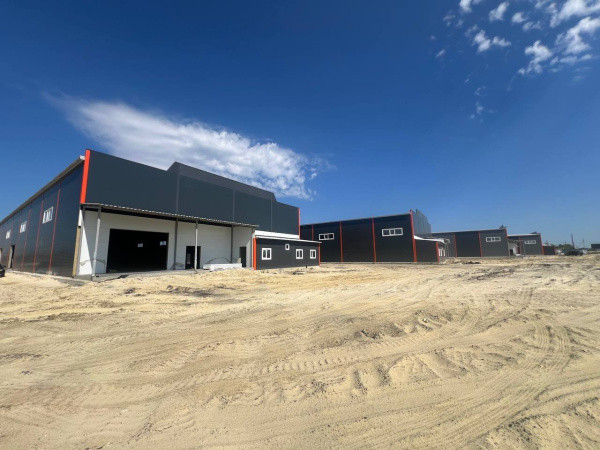
For many clients, "lightweight" is synonymous with "unreliable". In the field of industrial construction, this stereotype is particularly persistent. Clients fear that a lightweight frame will fail to withstand snow loads, deflect under equipment weight, or quickly fall into disrepair. It is time to address the most common myths about lightweight steel structures and to understand why they represent a sound choice for modern business, writes Inzhstroy-S.
Myth 1: "The thicker the metal, the more reliable the structure"
Reliability is determined not by mass, but by precise engineering calculations and quality of execution. Using heavy-gauge metal where it is not required is not a safety margin — it is an overspend. Designers use bending load analysis to determine the optimal cross-section for each structural element. A properly engineered lightweight beam or truss will perform no worse than — and often better than — its heavier counterpart, while costing up to 30% less. In the agricultural sector, where every rouble counts, this approach has long been the industry standard.
Myth 2: "Lightweight structures corrode quickly"
Corrosion resistance has no direct correlation with metal thickness. It depends on the quality of the anti-corrosion protection applied. Modern methods — such as zinc-based primer and coating systems — provide reliable protection for decades when correctly applied. A responsible manufacturer always incorporates a full anti-corrosion treatment cycle into the production process, guaranteeing the durability of lightweight elements.
Myth 3: "Saving on metal means saving on safety"
This is the most dangerous myth. Reducing metal content does not mean lowering the structural reliability class. On the contrary, the use of lightweight profiles often involves higher-grade steel — for example, higher-strength grades — which enables the same loads to be sustained at a lower mass. Current building codes (SNiP) require ultimate limit state design, and a lightweight structure that has passed this design process is entirely safe.
Myth 4: "Rapid-construction buildings from lightweight structures are short-lived"
The service life of an industrial metal-frame building, when properly maintained and protected, reaches 50 years. The lightness of the structures is not the determining factor here. The speed of erection is achieved through a high degree of factory prefabrication — all holes, embedments, and connections are completed at the production stage in accordance with detailed design documentation — rather than through any compromise in the permanence of the solution.
Myth 5: "Doing it yourself is cheaper than ordering a turnkey solution"
This is an illusion of control. By dividing design, metal procurement, cutting, welding, and installation across different contractors, you lose time and money managing the interfaces between them, and bear the risk of errors at every stage. Placing an order with a full-cycle manufacturer means unified accountability and a single warranty. At Inzhstroy-S, for example, there is no need to engage a separate welder or arrange transportation: production, delivery, and installation proceed as a single process under the control of one centre of responsibility.
Conclusion
By rejecting lightweight structures, you are forgoing the opportunity to complete a project faster and at lower cost without any sacrifice in quality. The key is to select a proven contractor who takes full responsibility for engineering, calculations, manufacturing quality, and turnkey installation.